
The Two Gravities of Your Stack
Why the tool you use most isn’t always the one that matters most

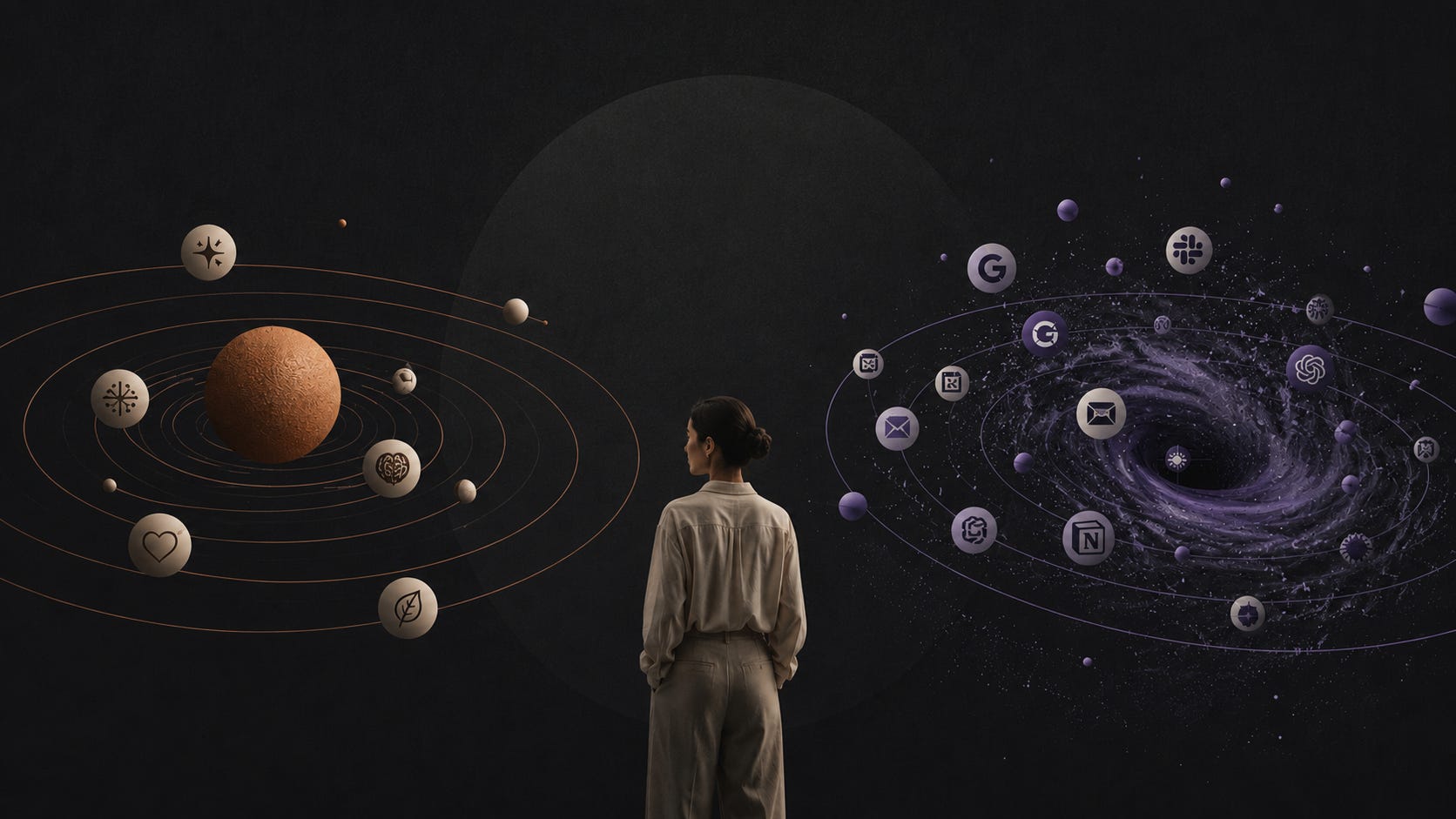
I ran a 7-day audit on my own stack recently. The results surprised me.
My Anchor — the tool I’ve declared as the center of my entire system — ranked fifth in time spent. I logged 23 minutes of focused time in Substack. Meanwhile, I spent over 2.5 hours in my AI assistant and nearly 3 hours in a slide editor I’d only started using seriously that week.
By any time-based metric, my “Anchor” should have been demoted. But something about that felt wrong. Substack wasn’t where I spent the most time, but it was still the thing everything else was for.
That tension revealed something I hadn’t articulated before in Conscious Stack Design™: there are two kinds of gravity in a stack, and most people are only measuring one.
Input Gravity vs Output Gravity
👉 Input Gravity is the pull a tool exerts on your attention, energy, and creative process. It’s where your thinking happens. It’s the tool you open first, return to most, and spend the longest sessions inside. High input gravity means high cognitive throughput — ideas flowing through the tool.
👉 Output Gravity is the pull a tool exerts on your outcomes. It’s where your work lands. It’s the destination that shapes what you create, when you ship, and who receives it. High output gravity means high strategic influence — decisions flowing toward the tool.
These are not the same thing. And confusing them is one of the most common stack misalignments I see in the real world.
A writing tool might have massive input gravity — you spend hours drafting, restructuring, thinking inside it. But if every draft is ultimately shaped by the publishing platform’s constraints (format, audience, schedule), the publishing platform holds the output gravity. It’s the attractor. The writing tool is the engine room; the publishing platform is the rudder.
Why This Distinction Matters
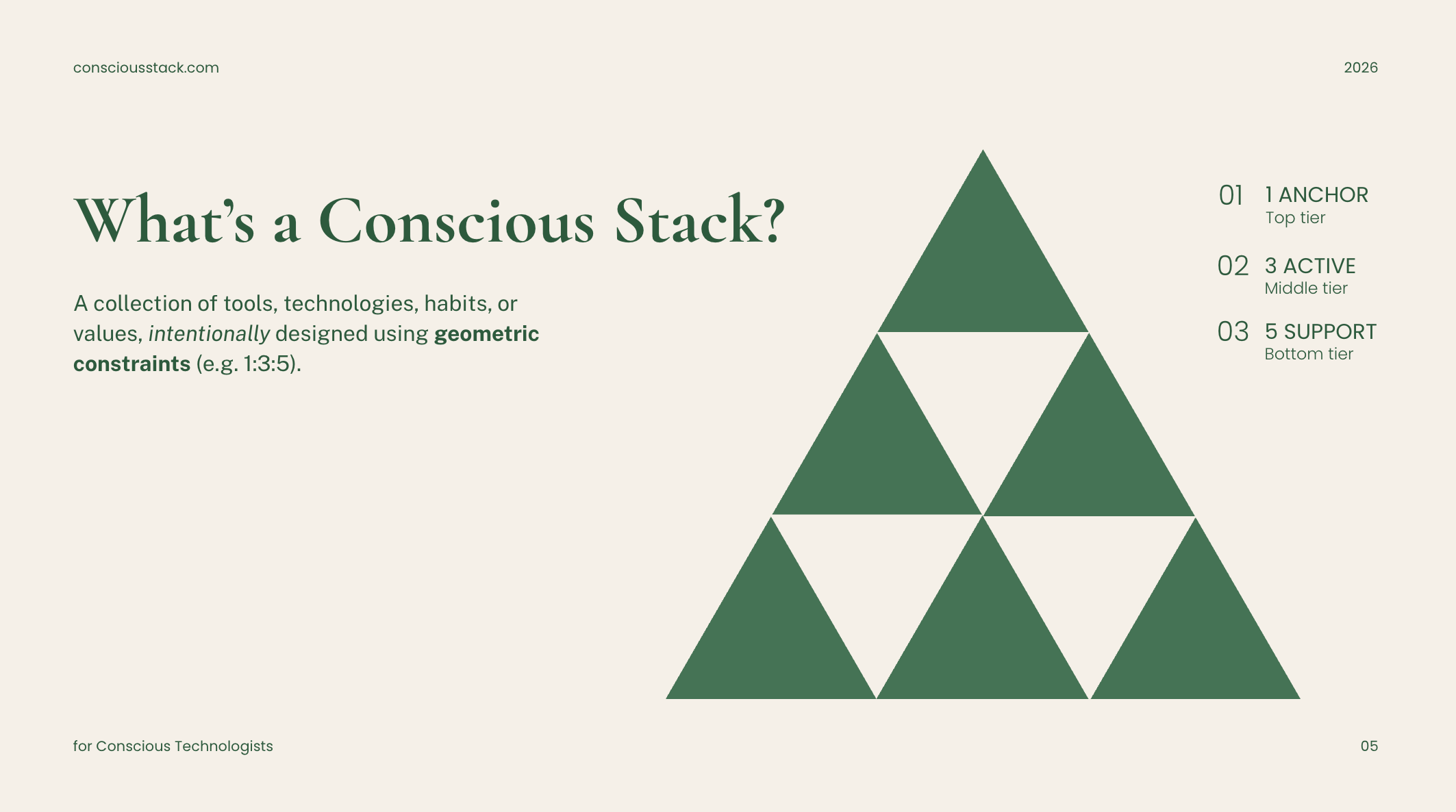
In our 1:3:5 Protocol, the Anchor is the single tool your entire stack orbits. Most people assume that means the tool they use the most. It doesn’t.
The Anchor is the tool with the highest output gravity — the one that, if removed, would leave every other tool purposeless. You can swap engines. You can’t swap destinations without redesigning the entire system.
When I audited my week, my AI assistant had the highest input gravity. Every essay, every slide deck, every client audit started there. But none of it mattered until it reached Substack — where it met an audience, generated trust, and created the conditions for revenue. Remove the AI assistant, and my process slows down. Remove Substack, and my process loses its reason.
That’s the difference.
The Drift Pattern
Problems emerge when input gravity starts masquerading as output gravity.
You’ve seen this before. A team adopts a new project management tool. Within weeks, they’re spending more time inside the tool — configuring dashboards, refining workflows, debating label taxonomies — than doing the work the tool was supposed to organize. The tool’s input gravity has inflated. It’s absorbed attention without producing proportional outcomes.
In the AI age, this pattern is accelerating. AI tools are exceptionally good at holding your attention. They respond, they synthesize, they feel productive. The input gravity is enormous. But if three hours of AI-assisted thinking produces the same essay you could have written in ninety minutes of focused silence, the tool isn’t serving you. You’re serving it.
This is what I call Gravitational Drift — when a tool’s input gravity grows unchecked and begins to pull energy away from the output destination.
Measuring the Delta
In my own work, I’ve started tracking this through what I call the Intent-Reality Delta.
👉 Intent is your declared stack architecture — the 1:3:5 you’ve designed. It represents where you want gravity to be. It’s strategic, deliberate, and forward-looking.
👉 Reality is your actual usage pattern — time, sessions, keystrokes, context switches. It represents where gravity actually is. It’s behavioral, honest, and often uncomfortable.
The gap between them is the delta. And the delta is the diagnostic.
A small delta means your stack is aligned. Your tools are doing what you designed them to do. A large delta means one of two things: either your intent needs updating (your strategy has shifted and your declared stack hasn’t caught up), or your behavior needs correcting (you’re drifting toward tools that feel productive but aren’t serving the Anchor).
Neither is inherently bad. But both require conscious recognition.
The Exoskeleton Check
In my essay on Cognitive Capacity, I argued that AI should function as an exoskeleton for cognitive energy — handling the low-P (predictable, probable) work so you can afford the metabolic cost of high-P (novel, sovereign) thinking.
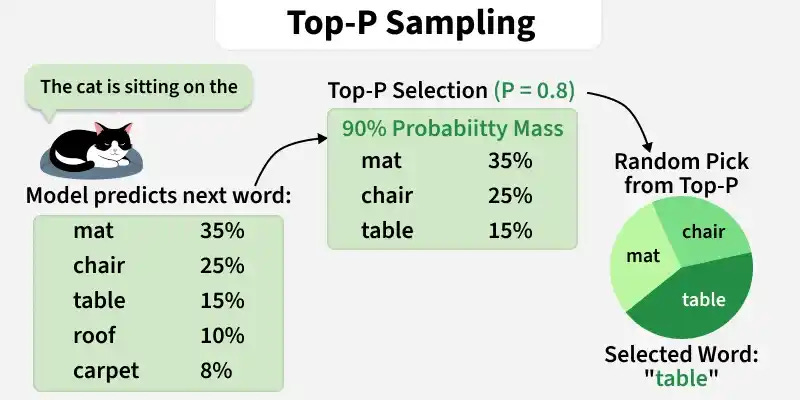
The same logic applies here. A tool with high input gravity is healthy when it’s functioning as an exoskeleton — when the time you spend inside it is preserving your energy for the output that matters. It’s unhealthy when it becomes the destination itself.
The check is simple: Does the time spent in this tool translate into progress at the Anchor?
If your AI assistant produced three essay drafts that all shipped to your newsletter — the chain of gravity holds. If your AI assistant produced three hours of fascinating conversation that never left the chat window — the input gravity consumed the energy the output gravity needed.
Build Accordingly
Your stack is not a list of tools ranked by screen time. It’s an architecture with directional forces. That’s where what we’re building in the background (on top of Conscious Stack Design™ principles) matters. Some tools pull your thinking in. Some tools push your work out. The conscious technologist knows which is which — and watches for the moment one starts pretending to be the other.
Map your input gravity. Map your output gravity. Measure the delta between your intent and your reality.
The tools don’t care which role they play. But you should.
🔺 Next: Run your own 7-day conscious stack audit. Track where your time goes first (start with looking at something like Screen Time), then ask: which tools hold your input gravity? Which hold your output gravity? And where’s the drift? Reply with what you find. The best stack insights come from real data, not assumptions.
Thank you for the great insights in this article! Siosi names something most stack audits miss: the tool you spend the most time in is not always the tool everything is for.
Input gravity versus output gravity. Where your thinking happens versus where your work lands.
Here is the part I want to push on. In AI work, input gravity is engineered.
The model is designed to hold you. It responds. It synthesizes. It feels like progress.
So the delta he describes is not a personal failing. It is a default. If you do not name the output destination on purpose, the tool with the best retention wins by silence.
Pick the Anchor first. Then let the model serve it.