
You're the average of the 5 tools
That you spend the most time with, according to Antoine

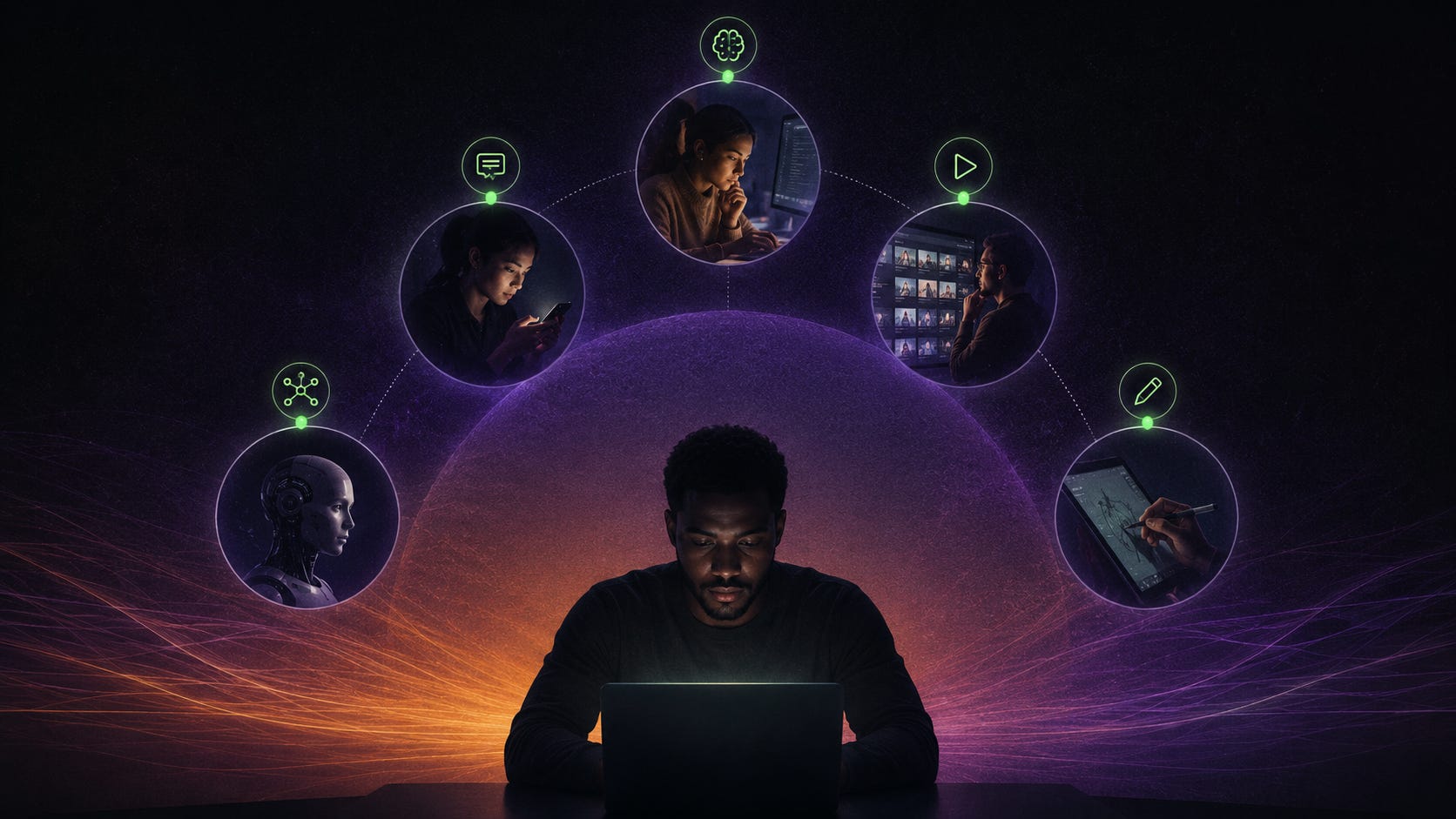
“You’re the average of the five people you spend the most time with.”
You’ve probably heard this quote before. Probably more than once. But there’s a version few have heard before, which we can’t take credit for — it belongs to Antoine, someone who attended our last CTs Unite! meetup in Chiang Mai.
During a follow-up call we had, he made a connection that was so on-point: “so, [based on the Conscious Stack™ framework] are you then also the average of the five tools you spend the most time with?” Yes Antoine, yes you are!
It’s the kind of analogy that’s so fitting it feels obvious in retrospect. And it maps directly onto our Conscious Stack™ framework — the practice of using geometric constraints to consciously choose which tools occupy your attention, your workflow, and ultimately, your identity.
Antoine had come to the meetup looking for this sort of thing. But in our call, he said something that stuck:
“Personally, I really feel — I mean, I already know — AI is something that pulls your entire thinking and connectivity. But these last few weeks and months, I really feel that, okay, I lost something. I lost the control I have on my work, the understanding. So that's why your project interested me. I tested it [consciousstack.com] and I liked the the formation of how we should build limits around our use with the 1:3:5 framework.”
He’s not a beginner. He’s not careless. He’s someone who knows tech — and how emerging AI tools are quietly reshaping how he thinks.
The boiling frog, but your cognition
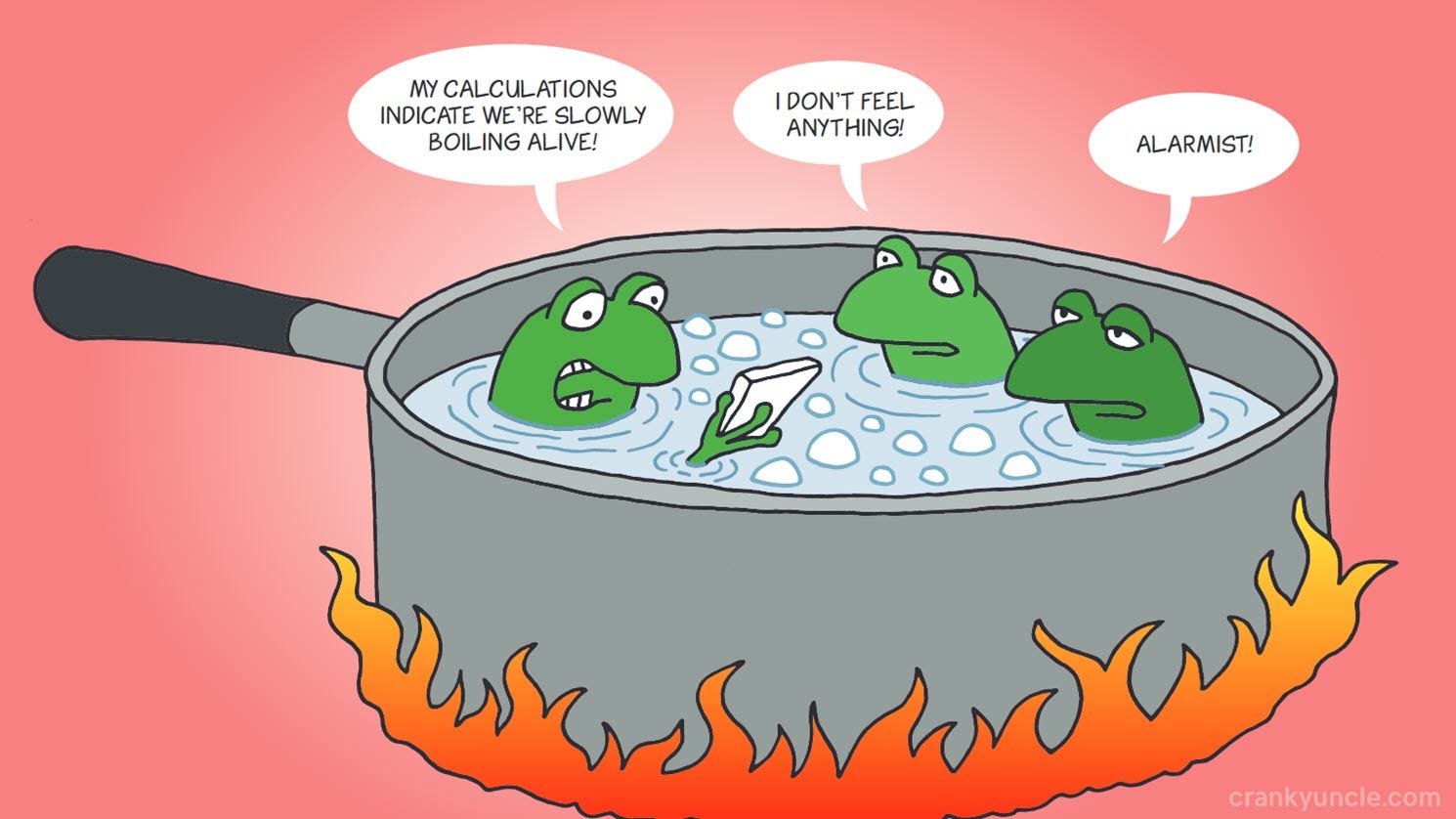
While on our call, I shared a story with Antoine about a stack audit I did with someone else. I asked them a simple question: what are the top apps you’ve used this week? He could name two. Maybe three. He had to open his phone to remember the rest.
This isn’t an intelligence problem. It’s a cognitive erosion problem. The constant context-switching — the tabs, the notifications, the new model drops, the “have you tried this tool” — it’s eroding something fundamental. Not your productivity. Your capacity to know what you’re actually doing. And it’s happening so gradually that most people don’t feel it until someone holds up a mirror.
When Conscious Stack™ was initially created, it mirrored Miller’s Law — a law that states that the human brain can only hold up to 7 (± 2) items at a time, giving credence to Conscious Stack’s 9-slot, pyramidal mental model. But recently, we discovered the work of Nelson Cowan, who identified that the magic cognitive number may now only be four (for short-term memory today) — a significant reconsideration of Miller’s findings around mental storage capacities.
Carbon, Silicon & The “Identity” Stack
But here’s a frame I keep coming back to: we humans are carbon-based. AI is silicon-based.
Carbon is slow, biological, bounded. It needs sleep, needs touch, needs meaning. Silicon is fast, limitless, always-on. And right now, most people are trying to compete with silicon on silicon’s terms — more tools, more speed, more outputs — while their carbon-based needs go unmet.
The result isn’t just burnout, but a fundamental identity drift. When your work was the anchor of who you are, and AI can now do your work, what exactly are you? Who exactly are you?
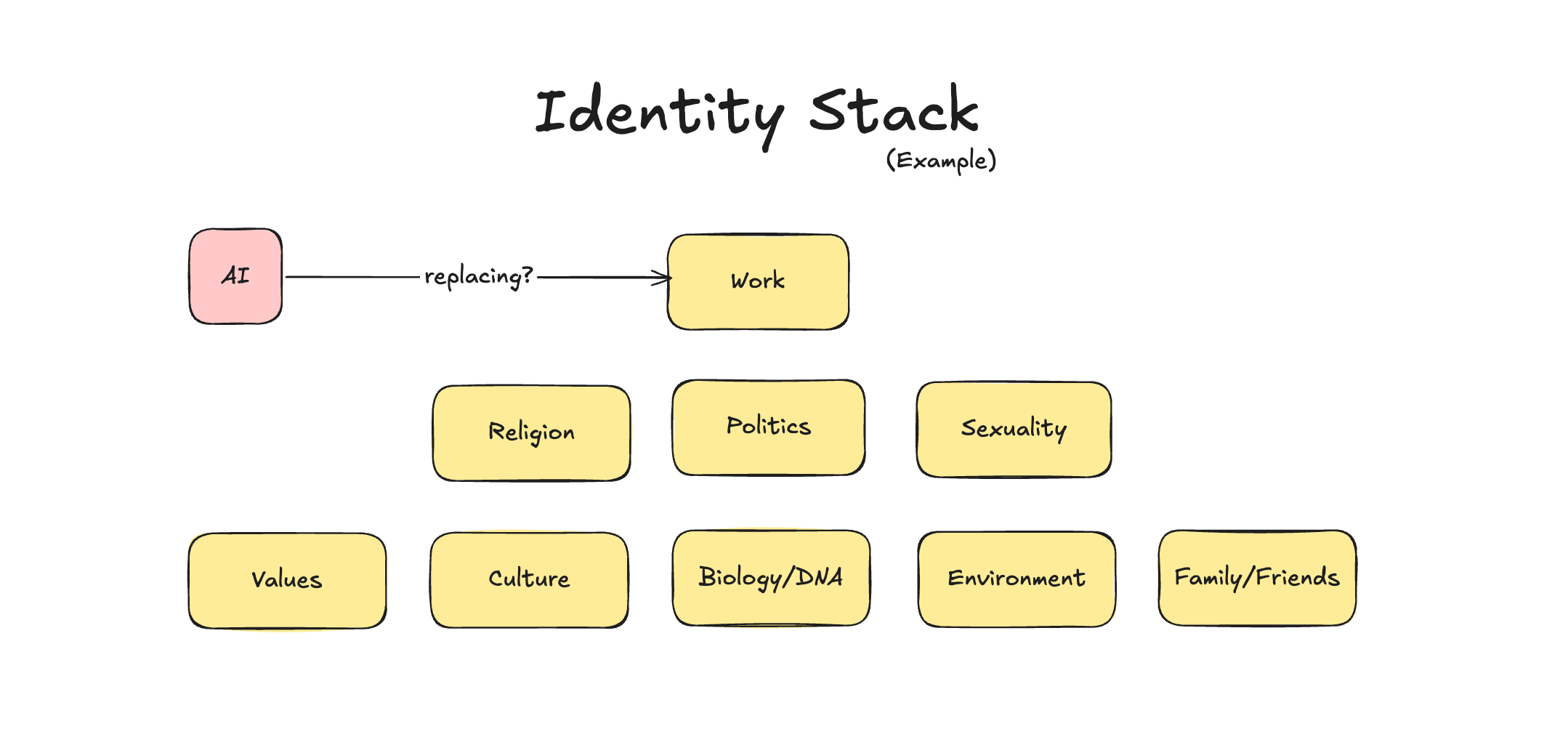
This is a question few in the productivity space are asking. They’re too busy selling you the next app, or productivity hack, that will supposedly fix the problem the last ten apps created. AI is making it easier than ever for anyone to build their own apps, so it’s becoming less valuable or desired.
Where this is going
After that conversation with Antoine, the shape of what we’re building became clearer — 144,000 conscious technologists who can read the wave of technological change, instead of just being pulled under by it.
People who:
See what’s happening and feel the urgency, but don’t want to abandon their lives to join a monastery or a hackathon
Have real responsibilities related to jobs, businesses, families
Want to be part of something that addresses a gap they feel every day but can’t quite name
Respect that the answer might come from somewhere unexpected — ancestry, geometry, the body — not just another framework from Silicon Valley or Deloitte
Because I don’t think we’ll actually be able to “keep up” with AI, and I don’t think we’re meant to.
In August, we’re launching a two-month program called the Oscillator. It’s designed for exactly the types of people I described above. Not to make you faster, but to make you coherent for the future that’s emerging with AI — to help you audit your own stacks, align your tools with your identity, and build the kind of internal architecture that doesn’t collapse every time a new AI model drops. Or any future technology for that matter.
More on that soon. For now, if this resonates, please do one thing for yourself: write down the top 5 tools you’ve used the most this week (use apps like Screen Time, which already exist for Mac users). Look at them. Then ask: are these apps shaping me — or am I shaping them?
If you don’t like the answer, you’re already closer than you think.
This essay is part of a series leading up to the launch of our CT Oscillator program. If you know someone who’d resonate with this, share it. Or if you’d like to learn more ahead of time, reach out in the comments. The movement grows one conversation at a time. For our community, be sure to check out: consciousstack.com/community.
here?